Research Article
Aim & Scope
UYBISBBD,
a
scientific peer reviewed one, at least two times in a year, June and
December since 2017. Applied, institutional, theoretical works
along with analysis and definitive, qualitative and quantitative
researches in relation to Management Information Systems and Computer
Science disciplines
could take places in the journal.
UYBISBBD, a scientific peer reviewed one, at least two times in a year, June and December since 2017. Applied, institutional, theoretical works along with analysis and definitive, qualitative and quantitative researches in relation to Management Information Systems and Computer Science disciplines could take places in the journal.
Smart Systems | MIS theories and approaches | Semantic network |
The main goal of UYBISBBD is comprise a scientific platform for academics who desire to share their knowledge, notions, findings and researches with colleagues while contributing in the named disciplines in national and international level.
Author Guidelines
1- Plagiarism Prevention
In accordance with the publication ethics of UYBISBBD, all articles submitted to the journal are subjected to a similarity scan with Ithenticate or Turnitin program before being submitted to the referee's evaluation. The upper limit for similarity is 20%.
If the similarity report is higher than 20%, the article:
1- It can be sent to the author for editing by the editor.
2- Rejection can be performed by the editor.
3- It can be sent to the editorial board for evaluation.
The matches of each study, which are revealed through the software, are examined in depth and the correct reference and attribution matches are selected. As a result of the selection, the remaining matches are examined, errors are detected and reported to the editorial board. The editorial board makes the final decision about the work in the light of the plagiarism inspection report of each work. The authors may be asked to correct the errors in the report or the work may be returned to the authors.
________________________________________
2- WRITTEN RULES
In the articles to be sent to UYBISBBD, the authors must comply with the principles and rules stated below.
Articles that are not prepared in accordance with the specified principles and rules may not be included in the evaluation process or may be excluded from evaluation at any stage of this process.
Click for Sample Word Template. This word template is the full format of the journal. After you bring your article to this format, upload it to the system.
Note:
- If you are going to upload the article to the journal for the first time, since blind refereeing will be applied, you must leave the author and institution information section blank and upload it to the system.
Writing rules:
1. Articles should be prepared in "Office Word" program in A4 size.
2. The length of the articles should be in journal format and should not exceed 20 pages.
3. Page layout; Left: 2 cm, Right: 2 cm, Top: 2 cm and Bottom: 2 cm.
4. Articles should be written in 12 font size, “Times New Roman” character and single line spacing. In my writing, a character break should be given after commas and periods.
5. Paragraphs should have a starting indent (first line – 1 cm), 6 pt space should be left before and after the paragraph. No additional blank lines should be left between paragraphs.
6. On the first page of the article, there should be a 14-point Turkish and English title, an 11-point Turkish and English summary not exceeding 200 words, and a minimum of 3 - a maximum of 5 Turkish and English keywords.
7. The title, name and surname of the author should be written in 12 font size, below the title of the article. If the author is under the name and surname, the place of duty and e-mail address of the author should be shown in 10 font size.
8. In the article, the main headings and subheadings are 12 point bold (bold) and left justified (without indent) as 1., 1.1., 1.1.1., 1.1.2., 1.1.2.1. should be numbered in decimal form. All letters of the main headings should be written in capitals, and only the initials of the subheadings should be written in capital letters. Headings should be divided up to a maximum of 4 levels. One line space should be left before the headings, and no space should be left after the heading.
9. All tables, figures and graphics in the article should be numbered consecutively at appropriate places in the text, centered on the page. Each table, figure or graphic should be given a title. Title; should be placed above the table, figure or graphic, centered on the page, with only the initials of the words in capital letters and in 12 points. The text in tables, figures and graphics should be between 9-11 points. Tables, figures or graphics should be easily readable and should conform to the page structure (not exceeding the page margins) given above. Example: Table 3: Mobile Usage Data
10. References should be made in the text using the conjunction method. Explanatory notes should be expressed as footnotes at the bottom of the page and in 10 points. References in the text should be made as the surname of the author(s), year of the source and page number. If there is no author name, the institution name should be used instead of the author. Sample;
• Citation in single-authored publications: (Korkmaz, 2013:70).
• Citation in publications with two authors: (Korkmaz and Talan, 2012:22).
• Citation in publications with three or more authors: (Korkmaz et al., 2014:35).
• Citation to more than one source: (Schumpeter, 1934:66; Wood, 2005:36)
• Citation for the full source: (Drucker, 1995)
• Citation for sources without author's name: (TUİK, 2012:45).
11. If the citation to be made is taken from a website and the author of the citation is determined, it should be cited in the same way as in the periodicals. If no date is given for the source downloaded from the internet, the date of access to the relevant file should be used as the year of the source. If the author of the citation is not known, the institution of the website and the year of access should be written in parentheses. Sample;
• Citation with the name of the author and publication year: (Aktürk, 2012)
• Citation with unknown author's name and publication year: (Competition Institution, 2008).
12. If more than one work of an author published in the same year is cited, the works should be indicated by giving letters a, b, c, next to the year. Sample;
• Korkmaz (2013a), Korkmaz (2013b).
13. All sources used in the article should be included in the bibliography section. The sources used should be listed in alphabetical order according to the surname of the author, without distinction of qualification (thesis, book, article, report, etc.). Works by the same author should be placed in the bibliography, starting with the "most recent" one. The bibliography indent should be set to (Hanging – 1 cm). The bibliography should be prepared in accordance with the examples given below.
- Books
ÇÖLKESEN, R. (2007). Data Structures and Algorithms. Daisy Publishing Education. Istanbul.
ASLANYÜREK M., KORKMAZ A., BULUT BÜYÜKGÖZE S., GEZGİN D.M. (2017). “Algorithm and Programming Question Bank with Complete Solutions”, Paradigma Akademi, Ankara.
- Translation Books
DRUCKER, P. (1994). Post-Capitalist Society, (Trans.) ÇORAKÇI, B., İnkilap Publishing House, İstanbul.
- Edited Books
KORKMAZ A., KARİMİ O. (2015). “Knowledge Management as a Competitive Advantage”, (Ed.) GÜLSEÇEN S., Information Management: Information Generators, Big Data, Innovation, Corporate Intelligence, Papatya Publishing Education, İstanbul.
- Books Without Author Name
DPT (2003). Socio-Economic Development Ranking Research of Provinces and Regions (2003), Publication No: DPT 2671, Ankara.
- Magazines
KORKMAZ A. (2015). “Design Of Microcontroller Controlled 2 Dimensional Earthquake Simulator”. International Refereed Journal Of Engineering And Sciences (5), 216-229.
- Newspapers
GOKCE, D. (1997). “The Problem of Independence of the Central Bank”, Milliyet, March 15.
- Theses
KORKMAZ, A. (2011). An Investigation of Interactive Teaching in Secondary Schools on a Model Course. Master Thesis. Kilis 7 Aralik University, Institute of Science and Technology. Report.
- Internet Based Resources
(i) If the author of the source is determined, it should be given in the bibliography, similar to the periodicals. However, the internet address of the source should be given with all its extensions. If no date is given for the sources downloaded from the internet, the date of access to the relevant file should be used both in the bibliography and in the text. Sample;
ENER, N. (2002). “Marketing Strategies for Emerging Markets”, http://iktisat.uludag.edu.tr/dergi/11/02-neriman/02-neriman.html, (10.05.2005).
(ii) If the source is taken from a web page of an institution or organization, not an author, the name of the institution, the title of the article (if any) and the internet address with all its extensions should be given in the bibliography. Sample;
COMPETITION INSTITUTION (2010). “Principles of Competition Law”, http://www.rekabet.gov.tr/index.php?Sayfa= Sayfaicerik&icId=53, (17.03.2010).
14. In cases not specified in writing, the points adopted in scientific writings should be taken into account.
15. Citation-Citation should be in APA 7 style. Check out the examples below.
________________________________________
Notable Updates in APA 7th Edition (2020) (For APA 7 What's New, See https://www.scribbr.com/apa-style/apa-seventh-edition-changes/)
- For works with three or more authors, the requirement to include all surnames in the first reference has been removed. Instead, the first author surname et al. is written.
- Information on up to 7 authors was given in the bibliography. The surnames and initials of up to 20 authors can now be given.
- In the bibliography, the place of publication of the books has been removed.
- The expression taken from … has been removed. The web address is written directly.
- The expressions used in the bibliography for electronic books [e-book version, kindle, etc.] have been removed.
- The DOI tag was written first. Now this tag is not considered necessary. It's written like any other URL link.
- When describing groups of people, it is recommended to use nouns instead of adjectives.Poor people. People living in poverty instead.
- Instead of broad categories, more relevant and specific full age ranges should be used. People over 65 years old. Instead of; People between the ages of 65-75 should be used.
You can get help from the links below for the citation/bibliography format you are looking for in APA style and for more information.
https://apastyle.apa.org/style-grammar-guidelines/references/examples
https://www.mendeley.com/guides/apa-citation-guide
https://www.scribbr.com/apa-citation-generator/
________________________________________
3- COPYRIGHT TRANSFER
The works submitted to UYBISBBD for publication must be original works that have not been published in any way or sent to be published anywhere.
Authors must agree to waive the copyright of their work and transfer the copyright of their work to UYBISBBD Journal together with the submission for evaluation. UYBISBBD Editorial Board is authorized to publish the article. However, the following rights of the authors are reserved;
o Patent rights,
o All unregistered rights other than copyright,
o The right to reproduce the work for its own purposes, provided that it is not sold,
o The right of the author to use all or part of the work in his own books and other academic works, provided that the source is cited,
o The right to have it on personal websites or in the open archive of the university, provided that it indicates the work file.
Authors who will send a work to UYBISBBD must fill in the "Publication Rights Transfer Agreement" document. The author(s) must sign the completed form with a wet signature. The signed form should be scanned and uploaded through the system. The works of the authors who do not submit the Copyright Transfer Form will not be published.
________________________________________
4. About Ethics Committee Permission
As of 2020, the TR Index Journal Evaluation criteria have been updated and the articles related to the ethics committee permission, which should be especially in scientific research, have been detailed. Click for studies that require Ethics Committee Permission.
Ethical Principles and Publication Policy
Publication Ethics Statement
UYBISBBD adheres to the highest standards in publication ethics and adopts ethical publishing principles published by the Committee on Publication Ethics (COPE), Directory of Open Access Journals (DOAJ), Open Access Scholarly Publishers Association (OASPA) and World Association of Medical Editors (WAME); For the principles expressed under the heading Principles of Transparency and Best Practice in Scholarly Publishing: https://publicationethics.org/resources/guidelines-new/principles-transparency-and-best-practice-scholarly-publishing
All submitted articles must be original, unpublished, and not in the process of being evaluated in another journal. Each article is double-blindly evaluated by one of the editors and at least two referees. Plagiarism, duplication, false authorship/denied authorship, research/data fabrication, article slicing, slicing, copyright infringement and concealment of conflict of interest are considered unethical behaviors.
All articles that do not comply with accepted ethical standards are removed from the publication. This includes articles with possible irregularities and inconsistencies detected after publication.
Research Ethics
UYBISBBD observes the highest standards in research ethics and adopts the international research ethics principles defined below. The compliance of the articles with the ethical rules is the responsibility of the authors.
Principles of integrity, quality and transparency should be ensured in designing the research, reviewing the design, and conducting the research.
The research team and participants, the purpose of the research, its methods and possible uses; should be fully informed about the necessities and risks, if any, of participating in the research.
Confidentiality of information provided by research participants and confidentiality of respondents should be ensured. Research should be designed in a way that preserves the autonomy and dignity of the participants.
Research participants should take part in the research voluntarily and should not be under any coercion.
Harm to the participants should be avoided. The research should be planned in such a way that it does not put the participants at risk.
Be clear about research independence; If there is a conflict of interest, it should be stated.
In experimental studies, written informed consent should be obtained from participants who decide to participate in the research. The consent of the legal guardian of children and custodians or those with a confirmed mental illness must be obtained.
If the study will be carried out in any institution or organization, approval must be obtained from that institution or organization.
In studies with a human element, it should be stated in the “methods” section that “informed consent” was obtained from the participants and ethics committee approval was obtained from the institution where the study was conducted.
Authors Responsibility
It is authors’ responsibility to ensure that the article is in accordance with scientific and ethical standards and rules. And authors must ensure that submitted work is original. They must certify that the manuscript has not previously been published elsewhere or is not currently being considered for publication elsewhere, in any language. Applicable copyright laws and conventions must be followed. Copyright material (e.g. tables, figures or extensive quotations) must be reproduced only with appropriate permission and acknowledgement. Any work or words of other authors, contributors, or sources must be appropriately credited and referenced.
All the authors of a submitted manuscript must have direct scientific and academic contribution to the manuscript. The author(s) of the original research articles is defined as a person who is significantly involved in “conceptualization and design of the study”, “collecting the data”, “analyzing the data”, “writing the manuscript”, “reviewing the manuscript with a critical perspective” and “planning/conducting the study of the manuscript and/or revising it”. Fund raising, data collection or supervision of the research group are not sufficient roles to be accepted as an author. The author(s) must meet all these criteria described above. The order of names in the author list of an article must be a co-decision and it must be indicated in the Copyright Transfer Form. The individuals who do not meet the authorship criteria but contributed to the study must take place in the acknowledgement section. Individuals providing technical support, assisting writing, providing a general support, providing material or financial support are examples to be indicated in acknowledgement section.
All authors must disclose all issues concerning financial relationship, conflict of interest, and competing interest that may potentially influence the results of the research or scientific judgment.
When an author discovers a significant error or inaccuracy in his/her own published paper, it is the author’s obligation to promptly cooperate with the Editor to provide retractions or corrections of mistakes.
Editor and Reviewer Responsibilities
The editor-in-chief evaluates articles regardless of the authors' ethnicity, gender, sexual orientation, nationality, religious beliefs, and political philosophy. It ensures that the articles submitted for publication undergo a fair double-blind peer-review. It guarantees that all information regarding the submitted articles will remain confidential until the article is published. The editor-in-chief is responsible for the content and the overall quality of the publication. If necessary, it should publish an error page or make corrections.
chief editor; does not allow any conflict of interest between authors, editors and referees. It has full authority to appoint a referee and is responsible for making the final decision on the articles to be published in the Journal.
Referees should not have conflicts of interest with the research, with the authors and/or with the financial supporters of the research. They should reach an impartial judgment as a result of their assessment. They should ensure that all information regarding the submitted manuscripts is kept confidential and should report any copyright infringement and plagiarism on the part of the author to the editor. If the referee does not feel qualified about the subject of the article or if it does not seem possible to provide a timely response, he should notify the editor of this situation and ask him not to involve himself in the referee process.
During the evaluation process, the editor clearly states that the articles submitted for review to the referees are the exclusive property of the authors and this is a privileged communication. Reviewers and editorial board members cannot discuss articles with other people. Care should be taken to keep the identities of the referees confidential. In some cases, with the decision of the editor, the comments of the relevant referees regarding the article can be sent to other referees who have commented on the same article, and the referees can be enlightened in this process.
Publication Policy
The journal adheres to the highest standards in publication ethics and adopts ethical publishing principles published by the Committee on Publication Ethics (COPE), Directory of Open Access Journals (DOAJ), Open Access Scholarly Publishers Association (OASPA) and World Association of Medical Editors (WAME); For the principles expressed under the heading Principles of Transparency and Best Practice in Scholarly Publishing: https://publicationethics.org/resources/guidelines-new/principles-transparency-and-best-practice-scholarly-publishing
Submitted articles must be in accordance with the purpose and scope of the journal. Manuscripts that are original, unpublished and not in the process of evaluation in another journal, whose content and submission have been approved by each author, are accepted for evaluation.
After the article is sent to the Journal for publication, the name of any of the authors cannot be deleted from the list of authors without the written consent of all authors, a new name cannot be added as an author, and the order of authors cannot be changed.
Plagiarism, duplication, false authorship/denied authorship, research/data fabrication, article slicing, slicing, copyright infringement and concealment of conflict of interest are considered unethical behaviors. All articles that do not comply with accepted ethical standards are removed from the publication. This includes articles with possible irregularities and inconsistencies detected after publication.
Plagiarism
Preflighted articles are scanned for plagiarism using iThenticate software. If plagiarism/self-plagiarism is detected, the authors are informed. If necessary, the editors may subject the article to plagiarism control at various stages of the evaluation or production process. High similarity rates can cause an article to be rejected before or even after it is accepted. Depending on the type of article, this is expected to be less than 20%.
Double Blind Refereeing
After plagiarism control, eligible articles are evaluated by the editor-in-chief for originality, methodology, importance of the topic covered, and compatibility with the journal scope. The editor ensures that the articles go through a fair double-blind review and, if the article complies with the formal principles, it submits the incoming article to at least two referees from the country and / or abroad, and if the referees deem it necessary, the editors approve the publication after the requested changes are made by the authors.
Price Policy
No fee is charged for the applications and evaluations made to our journal.
All expenses of our journal are covered by the editors of UYBISBBD.
Indexes
Citation Indexes





Other Indexes










Journal Boards
Founder / Owner
Editor in Chief
Editors




Editorial Board
Short Biography
Orhan ER, received the B.Sc., M.Sc., and Ph.D. degrees from the Sakarya University of Turkey, in 2001, 2004, and 2009, respectively, B.Sc., M.Sc. degrees in computer engineering and Ph.D. degree in electronics engineering. He worked in different departments including Computers Engineering and Electrical & Electronics Engineering departments since 2002. Currently, he is an Associate Professor at the Faculty of Engineering and Architecture at İzmir Bakırçay University. His research interests are performance modelling and optimization of machine learning, artificial neural networks and artificial immune systems applications in healthcare.


Luís Miguel Cardoso holds a PhD in Modern Languages and Literatures, in the speciality of Comparative Literature from the University of Coimbra, Portugal. He was Dean of the School of Education and Social Sciences of the Polytechnic Institute of Portalegre, Portugal, between 2010 and 2018 and Deputy Director of the Master in Media and Society. He was President of ARIPESE, Association of Reflection and Intervention in the Educational Policy of Higher Education Schools in Portugal (2015 – 2018).
Professor at the Department of Language and Communication Sciences at the School of Education and Social Sciences of the Polytechnic Institute of Portalegre, Portugal, he has been a professor of Higher Education since 1995 and is currently a researcher at the Centre for Comparative Studies at the University of Lisbon and CARE - Research Centre on Health and Social Sciences. His main areas of teaching and research are Sciences of Language and Communication, Pedagogical Innovation, Literacies (Digital Skills and Artificial Intelligence), Education, Higher Education and Social Responsibility, and Literature and Cinema, under which published articles and book chapters and made presentations in Portugal and several countries, including USA, Brazil, Chile, Colombia, Spain, Luxembourg, France, Switzerland, United Kingdom, Ireland, Italy, Greece, Hungary, Georgia, Bulgaria, Armenia, Poland, Romania, Canada, Vietnam, Turkey, Ukraine, Philippines, Thailand, Indonesia, United Arab Emirates, Iraq, Australia, Pakistan, Uzbekistan, Bangladesh, Saudi Arabia, Mozambique, Panama, Japan, China and India.
He is a member of several international organizations and associations, as well as a member of the editorial board of international journals in the areas of Language and Communication Sciences, Comparative Literature, Literature and Cinema, Literacies and Education.



 Web
Web
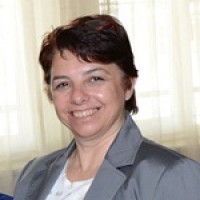
Dr. Sevinç GÜLSEÇEN, Lisans eğitimini 1984 yılında İstanbul Üniversitesi Fen Fakültesi’nde tamamlamıştır. Yüksek Lisans ve Doktora derecelerini Sayısal Yöntemler Anabilim Dalında almıştır. Yönetim Bilişim Sistemleri alanında 2006 yılında Doçent olmuş, 2012 yılında da profesörlüğe yükselmiştir.
Halen İstanbul Üniversitesi Enformatik Bölüm Başkanı ve Bilgisayar Bilimleri Araştırma ve Uygulama Merkez (BUYAMER) Müdürü olarak idari görevlerini sürdürmektedir.
Dr. Sevinç GÜLSEÇEN İstanbul Üniversitesi’nin ikili ve ERASMUS anlaşmaları kapsamında ABD, Litvanya, Slovakya, Bulgaristan, Çin, İtalya ve Polonya’da araştırma ve ders verme faaliyetlerini gerçekleştirerek projelerde yer almıştır. 2547 sayılı kanunun 39. Maddesi uyarınca 2011 yılında misafir araştırmacı olarak Ball State University’de (Indiana, ABD) bulunmuş ve 30 Kasım 2011 tarihinde Miller College of Business’da “Istanbul as Smart City: A Conceptual Framework” isimli bir konferans vermiştir. Enformatik bölümü bünyesinde 2016 yılında açılan İÜ İnsan-Bilgisayar Etkileşimi (İBE) Laboratuvarının kurucusudur. SCI, SSCI, ve alan indekslerine giren dergilerde yayınlanan 30 adet makalesi; 60 adet hakemli kongre/sempozyum yayını; kitap, kitap bölümleri ve kitap editörlüğü yaptığı 15 adet yayını bulunmaktadır. İstanbul Üniversitesi’nin 1964 ile 2019 yılları arasında yürütülen bilişim çalışmalarının kapsamlı olarak anlatıldığı “Haydar Furgaç Elektronik Hesapğ Merkezi’nden BUYAMER’e: İstanbul Üniversitesi’nin Bilişim Tarihinde Yolculuk” isimli kitabın da eş-editörüdür. İlgi alanları arasında başta Bilgisayar Programlama olmak üzere Sistem Analizi ve Tasarımı, Bilgi Yönetimi, İnsan Bilgisayar Etkileşimi ile e-Öğrenme yer almakta, bu konularda lisans, yüksek lisans ve doktora düzeyinde dersler vermekte olup çok sayıda yüksek lisans ve doktora tezi yönetmiştir. Istanbul University Press kapsamında bilimsel hakemli dergi olarak yılda iki kez yayınlanmakta olan ActaINFOLOGICA dergisinin başeditörüdür. Dr. S. Gülseçen’in yönettiği “Teknoloji Girişimi Hızlandırıcılarının İncelenmesi ve Etkinliklerinin Araştırılması: Türkiye’deki Hızlandırıcıların Ampirik bir Analizi” konulu doktora tezi ile öğrencisi Ceren Çubukçu TTGV tarafından 1.lik ödülüne layık görülmüştür.
Dr. S. Gülseçen, İÜ Fen Bilimleri Enstitüsü Enformatik Anabilim Dalı doktora öğrencileri ile 10 Haziran 2010 yılında İstanbul Üniversitesi’nde “2010 Avrupa Kültür Başkenti İstanbul’da Bilgi ve İnsan” konulu bir sempozyum düzenlemiştir. Sempozyuma İEM Bilgi İşlem Şube Müdürlüğü, İBB CBS Müdürlüğü, İBB Trafik Müdürlüğü yetkilileri ile dönemin Fatih ve Beyoğlu Belediye Başkanları katılarak, İstanbul halkının güvenlik, refah ve mutluluğunu arttırmak amacıyla geliştirilen Bilgi ve İletişim Teknolojileri destekli uygulamalarını anlatmışlardır.
Dr.S. Gülseçen, 3-5 Nisan 2019 tarihlerinde Gazi Üniversitesi tarafından düzenlenen Uluslararası Eğitimde ve Sosyal Bilimlerde Yenilikler Sanal Sempozyumu (IVSESS)’nda davetli konuşmacı olarak “New Educational Leadership: Are Educators’ and Learners’ Roles in Society Changing?” başlıklı bir sunum ve yine 16-18 Ekim 2019 tarihlerinde Trakia University (Bulgaristan) tarafından düzenlenen ICTTE2019 konferansında davetli konuşmacı olarak “Digital Transformation in Education: Active Learners“ başlıklı bir sunum yapmıştır.
Technologist Women Platformu tarafından Avrupa Birliği Sivil Düşün desteği ile “Bizi Birbirimize Bağlayan Şeyler” teması kapsamında 17-18 Ekim 2020 tarihlerinde düzenlenen #DijitalAnne eğitimlerinde “Dijital Dönüşüm ve Gelecek: Dijital Güçlenme” başlıklı bir konuşma yapmıştır.
İstanbul Üniversitesi Enformatik Bölümü, Türkiye Bilişim Vakfı ve Türkiye Bilişim Derneği tarafından 2004 yılından bu yana iki yılda bir düzenlenen International Future-Learning Conference on Innovations in Learning for the Future (Future Learning) konferansının eş başkanlığını yapmaktadır. Türkiye Bilişim Derneği, Türkiye Mantık Derneği, Yöneylem Araştırması Derneği ve John Atanasoff Society of Automatics and Informatics üyesidir. Dr. S. Gülseçen evli olup İngilizce, Bulgarca ve Rusça dillerini bilmektedir.
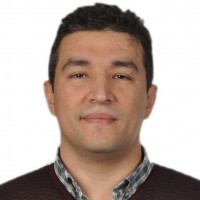
He received his Bachelor's, Master's and PhD degrees from Marmara University. His research interests include Machine Learning, Artificial Intelligence, Internet of Things, High Performance Computing.

 Web
Web
He received his BS, MS, and PhD degrees in Electronic and Computer Education from Sakarya University, Turkey, between 2004 and 2015. He joined the Computer Engineering Department at Sivas Cumhuriyet University as an assistant professor in 2017 and has been serving as an associate professor since 2024. His research interests include computer networks, cyber security, and software engineering.
English Language Editors
Turkish Language Editors


This work is licensed under a Creative Commons Attribution-NonCommercial 4.0 International License.